
Cold Plunge Maintenance: Our No-Nonsense Guide to Filtration and Hygiene
We’ve all been there. You lift the lid, ready for that sharp, mind-clearing reset, only to be greeted by water that looks slightly hazy and feels a bit suspect. Suddenly, the mental clarity you were chasing is replaced by a nagging doubt about what you’re about to climb into. We don’t see maintenance as a tedious chore on a Sunday afternoon; we view it as a ritual of respect. Keeping your water pristine isn’t just about protecting your investment in a cold plunge tub—it’s about honouring the cold water therapy practice that keeps you sharp, resilient, and grounded.
Why Water Hygiene Matters in Cold Water Therapy
There’s a common misconception that because the water is icy, it’s inherently sterile. Unfortunately, the opposite is often true. While the cold inhibits some bacterial growth, it doesn’t stop all of it. In fact, certain microorganisms thrive precisely in the wet, cooler environments that we create for our daily cold water immersion. Ignoring hygiene turns your sanctuary into a petri dish, and understanding the invisible risks is the first step to mastering a clean, safe plunge.
The Biofilm Problem in Cold Plunge Tubs
The primary enemy of a clean cold plunge isn’t a single floating germ; it’s biofilm. This is a slimy, glue-like substance that bacteria secrete to protect themselves and cling to surfaces. Once biofilm takes hold on your tub walls, pipework, or filter housing, it becomes incredibly resistant to sanitisers. This is particularly relevant for those of us dealing with the UK’s hard water regions, where limescale deposits create a rough, porous surface that acts as the perfect anchor for biofilm to establish a fortress. Scrubbing away the slime isn’t enough if you don’t address the mineral buildup underneath.
Skin Health and the Cold Water Immersion Connection
When we plunge, our pores rapidly constrict, but we’re still exposing our skin to whatever is in the water. One notorious culprit in poorly maintained water is Pseudomonas aeruginosa. This is a biofilm-forming bacterium that can survive and proliferate in cold water, posing a folliculitis risk—an itchy, red rash that’s often mistaken for acne. You’re stepping into the water to reduce inflammation, not cause it. Maintaining a strict hygiene protocol ensures that your cold water therapy supports your skin’s barrier function rather than assaulting it.
Understanding Your Filtration Setup
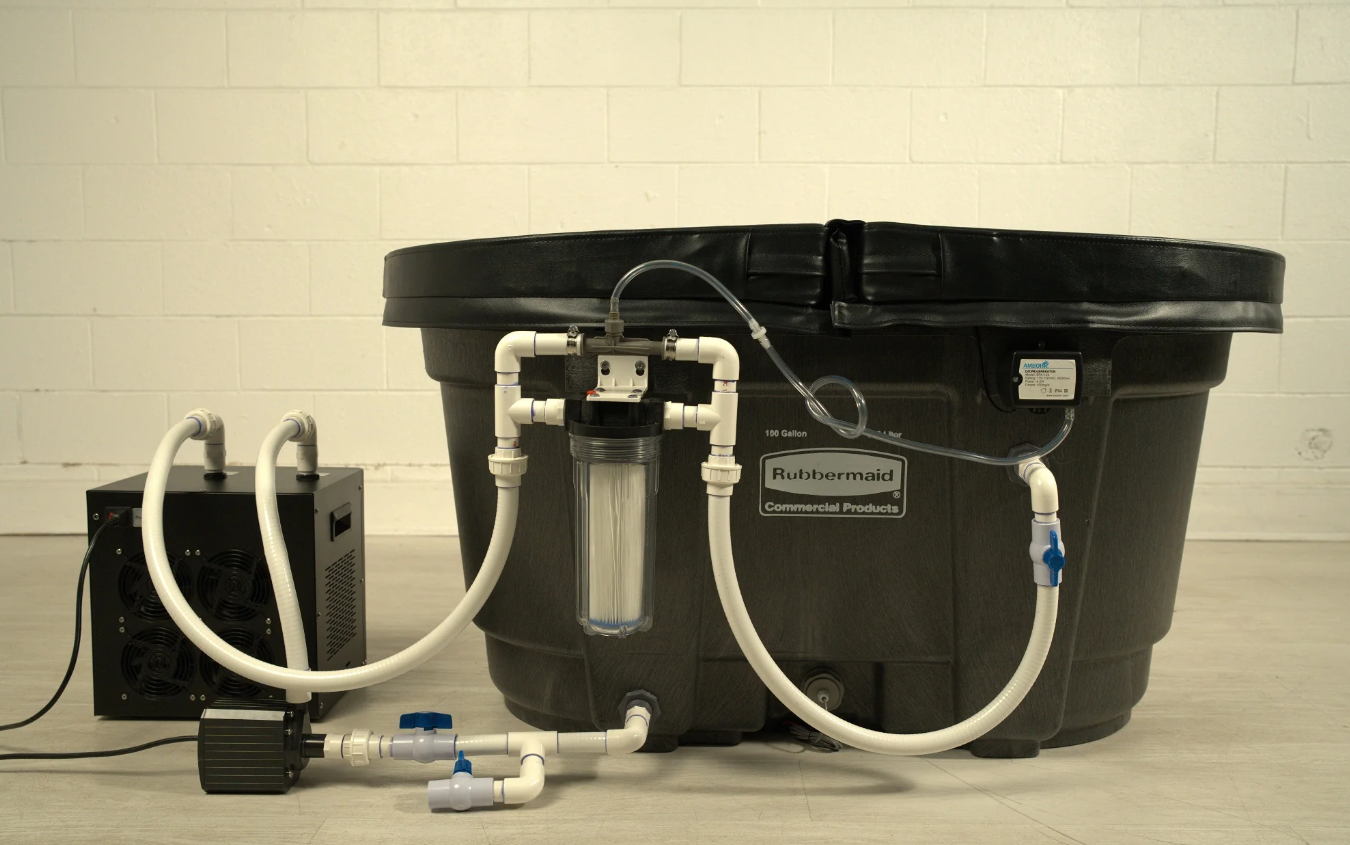
A crystal-clear plunge relies on a three-pillar defence system: mechanical, chemical, and optical. You can’t just pick one and hope for the best; they work in sequence. Most UK cold water enthusiasts are running setups that require a bit of tinkering, and understanding how water physically moves through your system is crucial before we even talk about adding chemicals.
Mechanical Filtration: Cartridge vs. Bag Filters
Mechanical filtration is your first line of defence, sieving out physical debris like hair, grass, and dead skin cells before they dissolve and cloud the water. Popular UK cold plunge brands like Brass Monkey and Lumi often use 20-micron inline cartridge filters requiring weekly rinsing. We find these pleated cartridges offer a good balance between flow rate and particle capture. If you’re using a converted chest freezer or a stock tank, you might be running a simpler bag filter or a coarse sponge. The key is the micron rating; the lower the number, the finer the particles it traps. Don’t let that filter sit until the water flow visibly drops—a clogged filter is circulating contaminants right back into your bath.
UV-C Sterilisation: The Chemical-Free Ally
After the water passes through the mechanical filter, it’s ideal to hit it with light. UV-C sterilisation units are a game-changer for cold water immersion because they disrupt the DNA of bacteria and algae, preventing them from reproducing. It’s a chemical-free process that works brilliantly as a secondary barrier. We like the AquaFinesse system or dedicated inline UV clarifiers often paired with UK tub setups. Just remember, UV-C only treats the water that passes through the chamber; it doesn’t kill biofilm already stuck to the walls. It’s a peace-of-mind tool, not a magic wand.
Choosing the Right Sanitiser for a Cold Environment
This is where many people get tripped up by applying standard hot tub logic to a cold environment. The chemical reactions we rely on to oxidise waste and kill pathogens are temperature-dependent. Dropping a standard chlorine tablet into 8°C water behaves very differently than it does in a 38°C spa. We need to rethink our chemistry to match the chill.
Chlorine vs. Bromine in Low Temperatures
Here’s the hard truth: chlorine’s sanitising efficacy decreases significantly in water below 15°C, making bromine or hydrogen peroxide often more stable choices. Chlorine struggles to dissolve and becomes sluggish in its attack on bacteria in the cold. Bromine, on the other hand, remains more stable at lower pH levels and lower temperatures. If you prefer a non-halogen route, food-grade hydrogen peroxide offers a powerful oxidising shock that breaks down into just water and oxygen. For those who stick with chlorine, you must use a granular shock rather than slow-dissolving pucks.
Dosing Frequency and Cold Plunge Tub Volume
Because we aren’t heating the water, we often underestimate the bather load. You’re bringing in sweat, oils, and environmental pollutants every time you enter. We recommend calculating your tub’s exact volume. A standard home plunge might hold 400–600 litres, but a stock tank can be far less. The AquaSPArkle brand offers non-chlorine shock treatments suitable for the lower temperatures of cold water therapy tubs, which we’ve found effective for a weekly oxidation boost. Test your water before and after plunging, not just once a week. A heavy usage day requires a reactive dose to keep the water clear.
Our Weekly and Monthly Cleaning Routine
Consistency beats intensity. We’ve developed a rhythm that takes mere minutes on a daily basis but prevents the need for a massive, back-breaking scrub-down later. This schedule is designed specifically to combat the mineral-rich water challenges we face in the UK.
The Quick Daily Skim and Cover Check
Before you even think about getting in, do a visual check. Use a fine mesh net to remove any floating debris—leaves, insects, or stray fibres. More importantly, keep the tub covered when not in use. A tight-fitting thermal cover prevents airborne bacteria and dust from entering, but it also blocks sunlight, which is a catalyst for algae growth. If your cover is waterlogged or torn, it’s introducing more problems than it’s preventing.
Deep Cleaning: Tackling Limescale and Biofilm
Once a month, it’s time for a full drain and scrub. UK hard water regions like London and the South East accelerate limescale buildup, requiring citric acid or white vinegar for deep cleaning. Don’t reach for abrasive bathroom cleaners; they’ll damage the acrylic or plastic and leave toxic residues. We use food-grade citric acid dissolved in warm water to wipe down the entire interior. This effortlessly dissolves the chalky white deposits that harbour biofilm. Pay close attention to the waterline, where oils and minerals combine to form a stubborn ring. Rinse thoroughly before refilling.
Managing Water Quality Without a Chiller
Not everyone has a high-end electric chiller that keeps a perfect 5°C day and night. Many of us in the UK rely on the ambient air and a bag of ice. This passive cooling method introduces a hygiene variable: temperature fluctuation. As water warms up slightly during the day, bacterial growth rates can spike before the ice brings it back down.
Insulation as a Hygiene Strategy
Stable water is clean water. We treat thermal insulation not just as a cooling tool but as a hygiene strategy. By wrapping your tub with high-grade foam or a bespoke jacket, you reduce the thermal cycling that stresses your sanitiser levels. Using large, reusable ice packs (frozen in a clean freezer) instead of loose bagged ice from the supermarket also prevents the introduction of phosphates and contaminants often found in commercial ice production.
Ozone Generators: Are They Worth It?
Ozone is a potent oxidiser—stronger than chlorine—and it reverts to oxygen without leaving a chemical residue. For those managing a tub without a chiller, a small inline ozone generator can provide a constant trickle of sanitation. It’s particularly effective at tackling the musty odours that arise when water sits stagnant and cool. However, ozone has a very short half-life in water, so it must be injected continuously via a venturi system. It’s a brilliant supplementary option, but it doesn’t replace the need for a mechanical filter to catch the dead particles it creates.
Troubleshooting Common Cold Plunge Issues
Even with a solid routine, things can go sideways. Your senses are often the best diagnostic tool. Before reaching for a test strip, look and smell. The specific character of a problem usually points directly to its source, and guessing wrong only wastes time and chemicals.
Cloudy Water and Slimy Surfaces
If the water looks milky or you feel a slick film on the walls, you’re likely dealing with a biofilm bloom or precipitated minerals. A strong chlorine smell is not a sign of a clean tub; it’s a distress signal. That acrid “chlorine” odour is actually chloramines—the byproduct of chlorine reacting with ammonia from sweat and urine. It means your water is dirty and starved of free available chlorine, demanding a heavy shock dose. Conversely, a musty or damp basement odour indicates mildew growth, often in the filter housing or the lid seal. These areas need a targeted scrub with white vinegar.
When to Drain and Refill Your Cold Plunge Tub
We don’t believe in setting a rigid calendar date for water changes, as bather load varies wildly. A tub used by one clean person who showers before entry can last two months. A tub used by a family with sunscreen and lotions might need a change every three weeks. Here is a simple rule of thumb we follow:
- Light Use (1 person, 3-4 times a week): Drain and refill every 6–8 weeks.
- Moderate Use (2 people, daily use): Drain and refill every 3–4 weeks.
- Immediate Drain: If you can’t see the bottom, if the water smells like a pond, or if your sanitiser levels refuse to stabilise despite a shock treatment.
Conclusion
A cold plunge tub is a vessel for mental resilience, but murky water undermines that goal entirely. By respecting the unique chemistry of cold water and adapting to the hard water challenges found across the UK, we protect our practice. Consistent, simple habits—a daily skim, a weekly filter rinse, and a monthly deep clean with citric acid—ensure that the only shock you experience is the invigorating clarity of the cold, never the sight of unpleasant, slimy water.
Frequently Asked Questions
Can I just use a standard hot tub chlorine tablet in my cold plunge?
We don’t recommend it. Standard hot tub tablets are designed to dissolve in warm water. In the cold temperatures of a plunge tub, they dissolve too slowly and can sit on the floor, potentially bleaching and damaging the surface. Chlorine’s sanitising power also drops off sharply below 15°C, so even if it dissolves, it’s far less effective than bromine or a dedicated granular shock.
Why does my cold plunge water smell strongly of chemicals even though it looks clean?
That sharp, chemical smell isn’t clean water—it’s chloramines. This smell occurs when your sanitiser has bonded with organic waste like sweat or skin oils. The solution is to shock the water with a high dose of oxidiser to break these bonds and burn off the waste. If the smell persists, it’s usually a sign that a full drain and refill is overdue.
How do I safely remove limescale without damaging my tub?
We always use food-grade citric acid or plain white vinegar. Mix a solution of warm water and vinegar, or dissolve citric acid powder, and apply it to the empty tub. Let it sit for a few minutes to soften the chalky mineral deposits, then wipe away with a non-abrasive microfibre cloth. Avoid harsh bathroom descalers, as they contain chemicals that can degrade seals and leave residues that irritate the skin during your next cold water immersion.
Is it safe to use an ozone generator without any other chemicals?
Ozone is a powerful oxidiser, but it’s not a standalone solution. It has a very short lifespan in water and only treats the water passing through the unit at that exact moment. It doesn’t leave a residual sanitiser in the tub to fight bacteria introduced by a bather. We view ozone as a brilliant chemical reducer that allows you to use less bromine or chlorine, but not as a complete replacement.