Recovery After Training: What Cold Water Immersion Really Does for Your Body
We’ve all been there. Last Tuesday, our team pushed through a brutal lower-body session—heavy Bulgarian split squats, Nordic curls, and a finisher of walking lunges that seemed to go on forever. By Wednesday morning, the simple act of descending the stairs felt like a monumental challenge. As we stood wincing over the kettle, the question naturally bubbled up: is the trendy cold plunge tub sitting in the garden actually going to fix this, or is it just a masochistic wellness trend dressed up as science?
The truth, as we’ve discovered through both personal experimentation and deep dives into the physiology, sits somewhere in the grey area between miracle cure and placebo. Cold water therapy isn’t magic, but it’s a remarkably effective tool when you know exactly which lever you’re pulling and when to pull it.
The Immediate Physiological Response to Cold Water Immersion
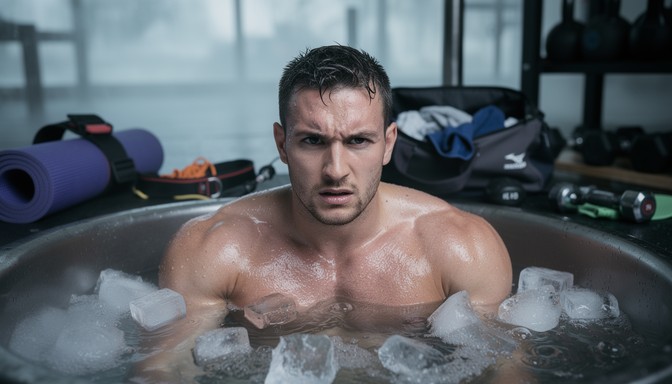
When you lower yourself into a cold plunge tub set between 10-15°C, your body doesn’t just register “cold”—it launches a full-scale physiological survival response. This isn’t a gentle nudge to your system; it’s an emergency drill that re-routes your entire circulatory and nervous function within seconds. Understanding this immediate shock is the key to understanding why cold water immersion works for recovery, and equally, why it can sometimes work against your training goals.
Vasoconstriction: Nature’s Emergency Brake on Swelling
The moment your skin hits cold water, your blood vessels constrict rapidly. This vasoconstriction acts as a biological clamp on blood flow to the periphery, specifically targeting the damaged muscle tissue you’ve just spent an hour tearing apart in the gym. By shunting blood away from the limbs and towards the core to protect vital organs, you effectively put an emergency brake on acute swelling. We’ve noticed this ourselves—that puffy, fluid-heavy feeling around the knees after a long run visibly reduces after a 10-minute soak. This is also where the mammalian dive reflex kicks in; your heart rate drops, and your body prioritises oxygen conservation, creating a systemic calming effect that directly counters the inflammatory cascade triggered by intense exercise.
Numbing the Pain: How Cold Disrupts Nerve Conduction Velocity
Beyond the vascular effects, cold water acts as a direct analgesic. Cold exposure slows down the speed at which nerves transmit signals, a phenomenon known as reduced nerve conduction velocity. Essentially, the cold physically makes it harder for pain signals to travel from your aching quads to your brain. It’s nature’s local anaesthetic, and it’s why you step out of a cold plunge tub feeling numb but oddly euphoric. The soreness hasn’t vanished, but the volume has been turned way down.
Reducing Delayed Onset Muscle Soreness (DOMS) with Cold Water Therapy
DOMS is the nemesis of consistency. That deep, aching stiffness that peaks 24 to 72 hours after exercise can derail your next training session. The primary reason athletes have flocked to ice baths for decades isn’t to boost muscle growth, but to simply feel human again faster. Historically, elite UK rugby clubs like Saracens have famously utilised post-match ice baths to manage the brutal physical toll of top-flight competition, allowing players to get back on the training pitch sooner rather than later.
What the Research Says About Perceived Recovery
The data is quite clear on this front. Meta-analyses pooling numerous studies have consistently shown that cold water therapy can reduce the perception of DOMS by roughly 20%. That’s a significant margin when you’re struggling to walk. It’s important to note the language here: it reduces the perception of soreness. We feel significantly better after plunging, and that subjective feeling of readiness is often enough to improve the quality of our next low-intensity session.
Why ‘Feeling Better’ Doesn’t Always Mean Faster Healing
Here is where the narrative gets sticky. While we feel brilliant stepping out of the tub, that numbness doesn’t equate to accelerated tissue repair. In fact, the mechanisms that make you feel good are the same ones that might be putting a pause on the biological repair signals. Just because the inflammatory swelling is down and the nerves are quiet doesn’t mean your muscle fibres are knitting back together faster. We had to learn this the hard way, mistaking the absence of pain for the presence of full recovery.
The Inflammation Paradox: Can Cold Plunges Blunt Adaptation?
This is the most critical debate in modern cold water therapy circles. Inflammation isn’t just a painful side effect of training; it’s the primary signal for adaptation. When you lift weights, you create micro-tears that trigger an inflammatory response, which in turn activates pathways like mTOR to build muscle protein. If you immediately jump into a cold plunge tub and shut down that inflammation, are you also shutting down the reason you trained in the first place?
Cold Water Therapy vs. Muscle Protein Synthesis
Recent studies suggest the concern is valid, particularly regarding hypertrophy and strength gains. Cold water immersion applied immediately after resistance training has been shown to attenuate long-term gains in muscle mass and strength. By blunting the activation of satellite cells and reducing the anabolic signalling, you risk protecting yourself right out of your gains. For our team, this was a wake-up call. Using the cold plunge tub after a heavy deadlift session might be actively sabotaging the muscle we’re trying to build.
Timing Matters: Separating Cardio Recovery from Strength Recovery
The context of your training dictates whether cold water therapy is a friend or foe. For endurance work or skill-based sports where inflammation offers little hypertrophic benefit and simply hampers performance, post-session cooling is almost universally positive. The British Association of Sport and Exercise Sciences (BASES) supports the use of hydrotherapy protocols primarily for managing perceptual fatigue in multi-stage events or high-volume training blocks. The problem is applying a cardio recovery tool to a strength training context without adjusting the timing.
Mental Recovery and Nervous System Down-Regulation
Recovery isn’t just about muscles; it’s about the central nervous system. Intense training spikes cortisol and keeps you in a sympathetic “fight or flight” state. If you remain wired and tired, sleep quality plummets, and recovery stalls. This is where cold water immersion shines beyond the musculoskeletal debate. It forces a physiological reset button that no amount of foam rolling can replicate.
The Vagus Nerve and Post-Workout Anxiety
Cold exposure on the face and neck stimulates the vagus nerve, the main highway of the parasympathetic nervous system. This activation encourages a deliberate shift into “rest and digest” mode. We’ve found that a controlled immersion helps dissipate that jittery, anxious energy that often follows a high-intensity metcon or a stressful competition. Heart rate variability increases, breathing deepens, and cortisol levels drop, making it a potent antidote to overtraining syndrome.
Building Mental Resilience Through Controlled Discomfort
There’s also a profound psychological training effect. Voluntarily stepping into a freezing cold plunge tub is an act of embracing discomfort. It teaches you to regulate your breathing under stress and remain calm when every instinct screams at you to escape. This mental fortitude transfers directly back to the training ground, helping you push through the final rep or maintain composure during a race.
Practical Cold Water Therapy Protocol for UK Athletes
You don’t need a high-tech, refrigerated unit costing thousands of pounds to reap the benefits. A unique advantage for UK athletes is the ambient climate. During winter, typical UK tap water temperatures average between 10-15°C, making a basic cold plunge tub viable without adding a single bag of ice. We’ve run this protocol successfully using a simple outdoor tub filled straight from the garden hose.
Optimising Water Temperature and Duration
We aim for the sweet spot of 11-15°C. Colder isn’t always better; plunging into near-freezing water often causes excessive muscle tension and shortens the safe immersion time. We target a total immersion time of 10 minutes. This can be broken into two 5-minute blocks if the cold shock is too intense initially. This duration is sufficient to lower tissue temperature and trigger vagal stimulation without risking hypothermia.
Contrast Therapy: Alternating Heat and Cold for Circulation
For a circulatory flush, we often switch to contrast therapy. This involves alternating between the cold plunge tub and a hot sauna or hot bath. The rapid vasoconstriction followed by vasodilation creates a pump effect that helps flush metabolic waste. High-end facilities like Third Space London offer dedicated contrast therapy areas with precise temperature controls, but we’ve replicated the effect at home by moving between a hot shower and the garden plunge tub for 3-4 rounds.
For those who prefer a natural setting, the growing community of year-round swimmers at the Serpentine swimming club in London proves that outdoor cold water immersion is deeply embedded in UK culture. The social aspect of braving the elements adds another layer of mental recovery that a solo tub at home sometimes lacks.
Integrating Cold Water Immersion Into Your Weekly Training Split
Scheduling is everything. We don’t view cold water therapy as a post-workout default, but as a targeted intervention within the weekly training rhythm. The goal is to maximise perceptual recovery without blunting the positive adaptations of training.
Sample Weekly Schedule for Hybrid Athletes
For those mixing strength and endurance work, here’s how we structure it:
- Monday (Heavy Strength): No cold immersion. Allow natural inflammation to drive the adaptation signal.
- Tuesday (Zone 2 Run/Cycle): Cold plunge tub immediately post-session to reduce any nagging joint stiffness.
- Wednesday (Hypertrophy Session): Wait 4-6 hours post-workout before considering a plunge, or skip it entirely if soreness is manageable.
- Thursday (Active Recovery/Yoga): Contrast therapy session (sauna and cold plunge) for circulation.
- Friday (High-Intensity Intervals): Cold plunge immediately post-session for nervous system down-regulation.
- Saturday (Long Outdoor Activity): Post-activity cold immersion, potentially at a local lido or the Serpentine.
Listening to Your Body Over Rigid Rules
This schedule is a framework, not a dogma. If we’re feeling systemically exhausted and cortisol levels feel sky-high, we prioritise the nervous system benefit over the muscle synthesis concern, even on a strength day. The 4-6 hour window after hypertrophy training is a guideline based on the peak of the mTOR signalling cascade, but if your sleep is suffering, a brief cold plunge tub session before bed can be the lesser of two evils.
Cold water therapy is a powerful tool for perceptual recovery and nervous system health, but it requires strategic timing. We’ve learned to respect the cold not as a daily punishment, but as a precise instrument for tuning the body. Use it to feel better and calm the mind, but be wary of using it to short-circuit the very processes that make you stronger.
FAQ
Does a cold plunge tub help with muscle growth?
Not directly, and it can actually hinder muscle growth if used immediately after strength training. The cold reduces inflammation, which is a necessary signal for muscle repair and hypertrophy. We recommend waiting at least 4 to 6 hours after a heavy lifting session before using cold water immersion to avoid blunting the anabolic response.
What is the ideal temperature for cold water therapy in the UK?
We find the optimal range to be between 11°C and 15°C. The advantage of the UK climate is that tap water often falls within this range naturally during autumn and winter, meaning you can fill a cold plunge tub without needing to add ice. This temperature is cold enough to trigger vasoconstriction and vagus nerve stimulation without posing a significant risk of cold shock.
How long should I stay in a cold plunge tub after training?
We stick to a maximum of 10 minutes of total immersion. You can split this into shorter blocks if you are new to cold water therapy. Staying in longer doesn’t necessarily increase the recovery benefits and can increase the risk of excessive cooling, which might lead to muscle stiffness rather than relief.
Can I do cold water immersion every day?
You can, but it depends on your training goals. If your weekly focus is primarily on endurance or skill-based work, daily use can manage systemic fatigue. If you are focusing on building muscle mass and strength, we advise against daily post-workout plunging and suggest limiting it to non-strength training days or using it solely for mental recovery on rest days.